Living Ports

Concrete‑based coastal and maritime infrastructure (CMI) dominates coastal areas worldwide. These structures, which replace or encroach upon natural habitats, can provide an ecosystem similar to that of undisturbed coastlines. However, studies show that marine flora and fauna in CMI areas are less diverse than in natural ecosystems and are often dominated by opportunistic or even invasive species.

To minimize these effects, the LIVING PORTS project proposes adapting maritime and port infrastructure to climate change through the demonstration and implementation of sustainable solutions capable of reducing the carbon footprint by using recycled materials, while promoting the growth of marine flora and fauna on their surfaces through innovative design. This new sustainable concept for port protection infrastructure is based on a concrete matrix with a reduced carbon footprint through the incorporation of recycled glass, which significantly reduces the amount of Portland cement, the main contributor to the carbon footprint associated with concrete. The design shift transforms these structures from passive elements with high environmental impact into active elements that promote the growth of marine flora and fauna, contributing to CO₂ sequestration.

To validate the concept, a series of pilot structures were designed and installed in the Port of Sagunto to monitor the settlement and growth of native marine flora and fauna.

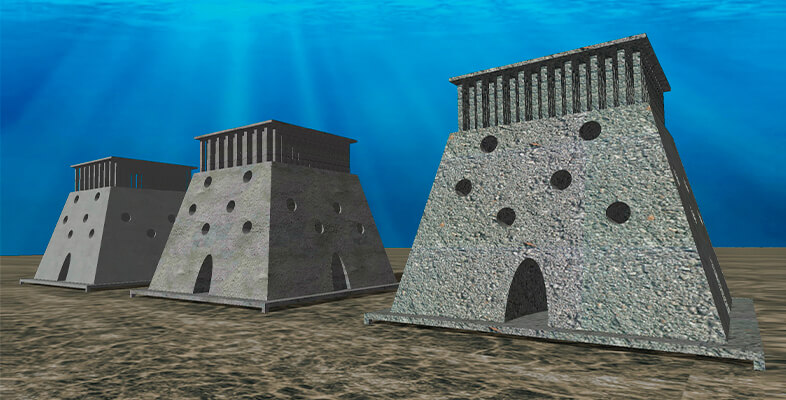
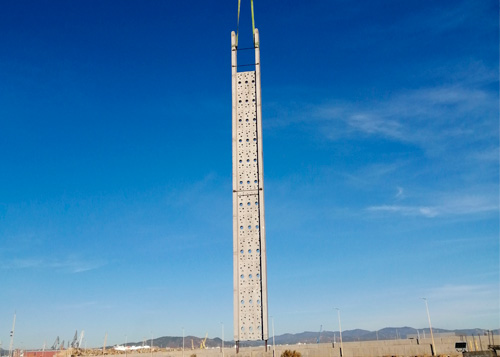
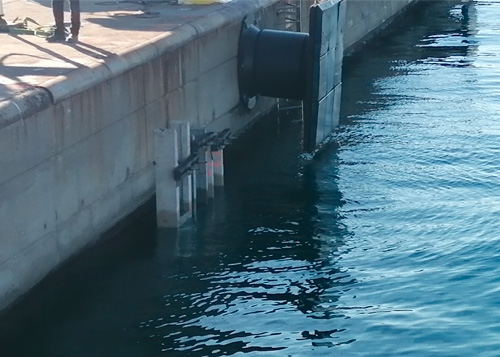
The pilot elements consisted of a series of vertical concrete panels placed against the quay wall as a prototype of the outer wall of a caisson quay, and another series of pyramidal blocks placed on the seabed as a prototype of artificial reef units. For the manufacture of these pilots, conventional concrete was used as a reference, along with two low‑carbon concretes with different recycled glass contents. Within each pilot, different surface finishes were included, mainly distinguished by their roughness.

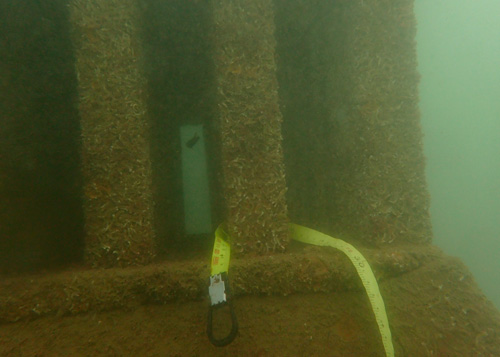
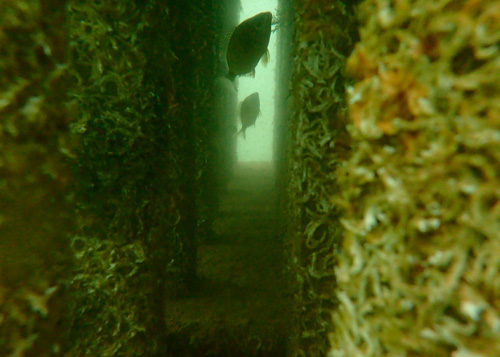
These pilot structures have been monitored since their installation through various inspection campaigns involving visual inspections of the area, surveys with underwater drones or divers, and sampling for species characterization.

Main results obtained

After several months of monitoring, the amount of polychaetes, fish, and marine fauna associated with the structures—especially the submerged pyramidal blocks—has been remarkable. Although it is still too early to observe differences in settlement between the various concrete types or surface roughness levels, the early stages of ecological succession are already evident, with a significant presence of polychaetes and fish in the upper areas of the pyramidal blocks.

In upcoming monitoring campaigns, it is expected that differences in the settlement of photosynthetic organisms, such as algae, will become apparent.

Living Ports is a consortium project promoted and led by Rover Maritime, supported by the Valencian Innovation Agency under the Strategic Cooperative Projects program.


rvgp-living-ports-2

Influence of Surface Roughness on Algae Attachment

Although conclusive results in real environments are not yet available, laboratory monitoring of specimens—conducted in aquariums designed to promote the growth of certain algae species—has yielded very interesting findings. It was observed that smooth finishes showed virtually no algae attachment, whereas rough‑textured surfaces exhibited a greater presence of algae, with colonization increasing as surface roughness increased.

This is illustrated in Figure 1, which shows the total organic carbon (TOC) fixed on each type of surface for the species Enteromorpha compressa.

rvgp-living-ports-5

Relationship between Glass Content in Concrete and TOC Fixation

Figure 2 shows the average TOC (Total Organic Carbon) content by type of concrete. It can be observed that TOC content is higher in the blocks made with V3 material, which corresponds to the concrete with the highest glass content (V2 contains an intermediate amount of glass, while C refers to conventional concrete).

rvgp-living-ports-6

Careers

Work
with us

Be part of a leading, international team in infrastructure development, committed to the professional growth of its people. Join Rover and work in a safe, diverse, and inclusive environment where teamwork, communication, and a spirit of continuous improvement drive new challenges and collective success.

LinkedIn

Rover Grupo | LinkedIn Rover Grupo | 44.308 seguidores en LinkedIn. 60 años construyendo sueños | Bienvenido a Rover Grupo!! Empresa valenciana de desarrollo de infraestructuras con presencia internacional. La empresa cubre todos los ámbitos de la obra civil: carreteras y autovías, ferrocarriles, marítimos, conservación de aguas, urbanizaciones, hospitales, fotovoltaica...

Follow us on LinkedIn