Completed the first phase of the Wheel prototype
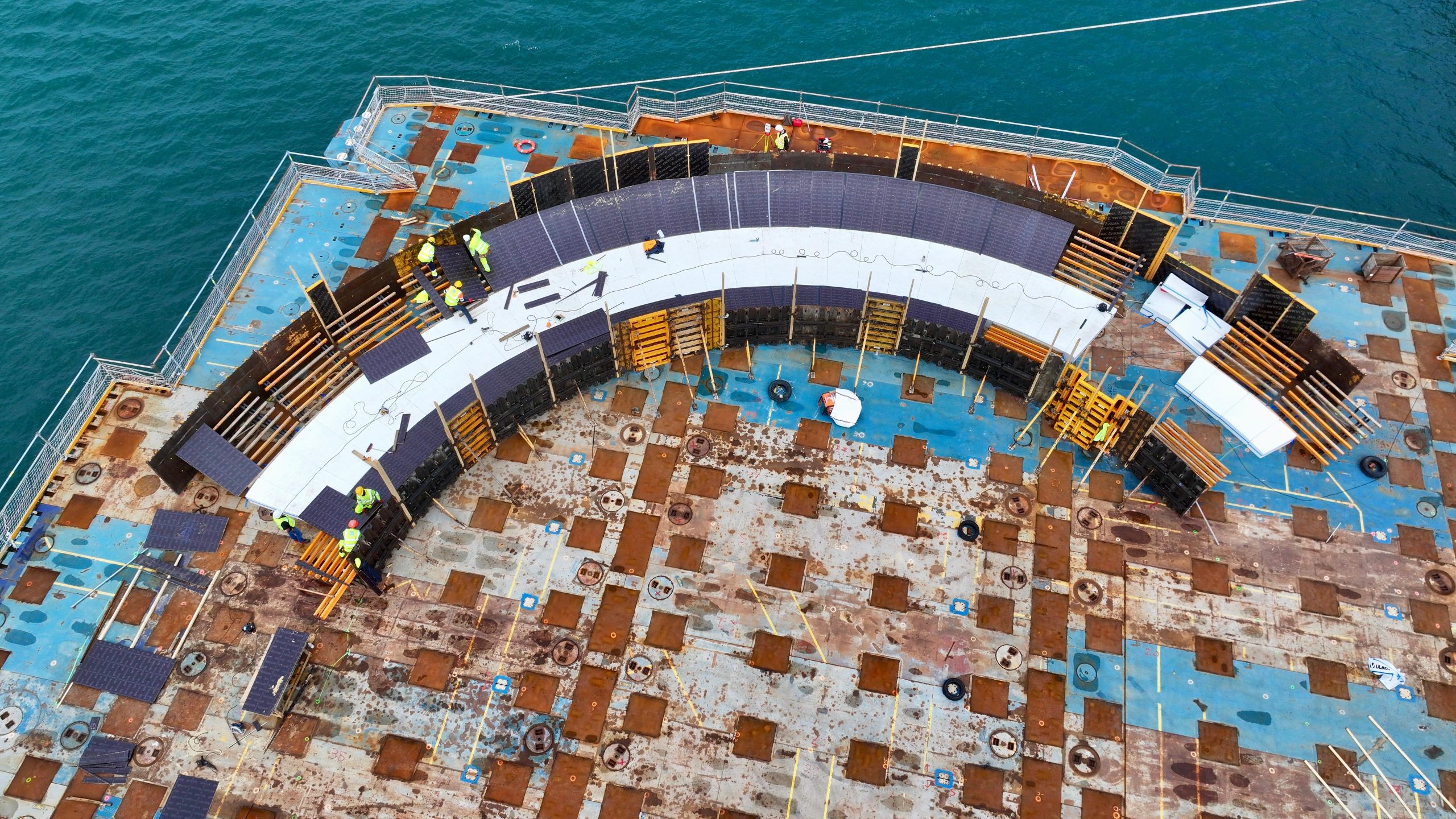
The Wheel project progresses with the start of construction of the first sector of the Upper Tank’s sole. At the general assembly of the consortium held in March in Las Palmas de Gran Canaria, the final design and construction strategy was presented to the consortium and the CINEA Project Officer. This day marked the beginning of the prototype execution phase.
The Wheel project develops a globally innovative technology for the implementation of offshore wind farms, based on floating concrete structures. The scope of Rover within the innovation project, for its experience in building marine crates on a bucket dock, focuses on the construction of the concrete float on a floating modular pontoon. This concrete float is an infrastructure intended to support the weight of the wind generator and ensure its buoyancy in open water. The construction of the prototype will allow to validate its constructive and technical feasibility.
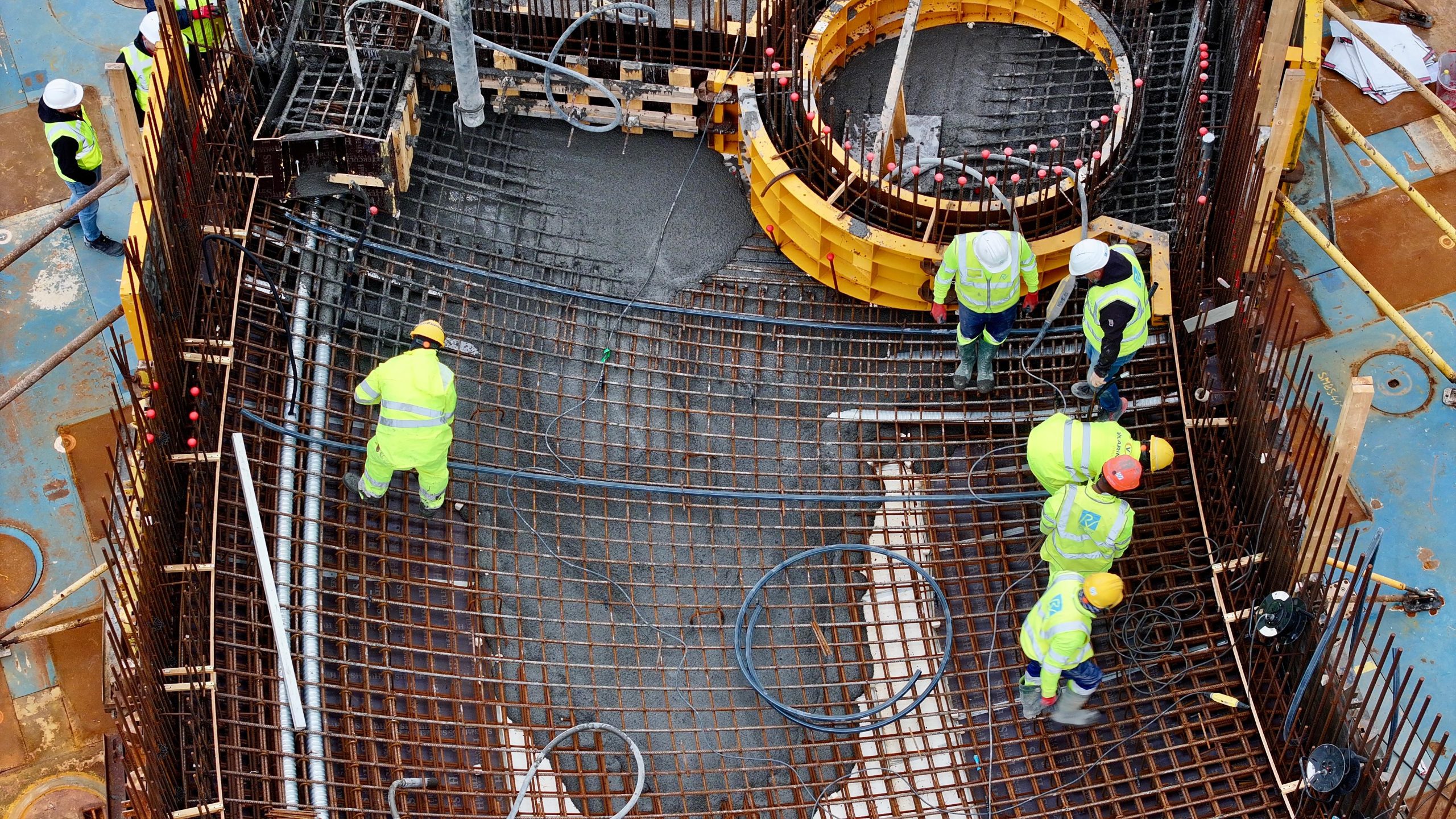
In the week of Easter, the first sector of the Upper Tank basement that will form the prototype floater has been successfully executed. For the construction of this first milestone, 110 cubic meters of a special mixture of lightweight concrete poured by a 42-meter autopump have been used which has posed an important technical and logistical challenge. This process required precise coordination and continuous adaptation, allowing for valuable learning that will serve to optimize the next phases of prototype construction. It should be noted that the crankcase was assembled in situ by the Rover team on a floating modular pontoon, adapting its geometry to reproduce the curvature as a ring.
The next phases of the project will consist in the shearing of the remaining two sectors until completion of the Upper Tank slab. Subsequently, it will proceed to the construction of the vertical elements that will compose this infrastructure that will support the tower and turbine of the wind generator.