Hormiports

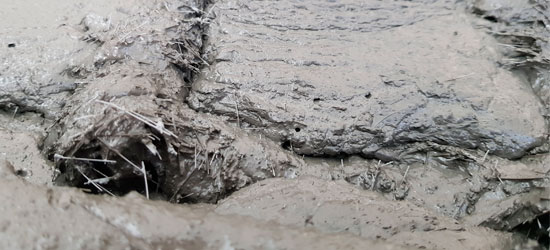
The Hormiports project is based on the application of Fiber‑Reinforced Concrete (FRC) in the manufacturing of anti‑reflective concrete caissons (NoWaves patent) for vertical quay walls. The objective is to reduce conventional reinforcement and the thickness of certain sections, thereby achieving a lighter and more slender structure, as well as reducing execution times. In specific areas of the caisson, it was verified that the fibers could completely replace traditional reinforcement.

In designs where the complete elimination of reinforcement in all walls is proposed, double‑anchored fibers should be used (Mod1, Mod2, and Mod3). However, due to their high cost, intermediate solutions were proposed in which the two types of fibers studied are combined with conventional reinforcement (Mod4, Mod5, and Mod6).

A cost comparison was carried out between caissons made with FRC and those made with conventional concrete (considering only the walls, excluding the base slab) for the six project models. In all cases, despite the high cost of steel fibers, the overall caisson cost is reduced by between 2.5% and 3.5%.


Development and validation of the use of FRC in maritime caissons

For the development of the project, various caisson designs (standard and anti‑reflective, with square and circular cells) were modeled using both conventional reinforced concrete and fiber‑reinforced concrete.

Firstly, the design criteria were defined for a specific caisson model capable of withstanding loads during the construction phase and throughout its service life under different reference environmental conditions, considering hydrodynamic, sizing, and constructability criteria. Subsequently, with the support of ICITECH (UPV), an FRC mix design was developed that met both the functional requirements of the product and compatibility with caisson manufacturing processes.

Next, beams with different mix designs were manufactured and tested under various conditions to verify the required performance. The laboratory data obtained were then used for the modeling of concrete caissons in which fiber‑reinforced concrete was applied to some or several of their elements. As expected, it was confirmed that longer fibers with double anchorage exhibit greater mechanical capacity, and their effect becomes more significant as the thickness of the section decreases.

Based on the results obtained, the feasibility of using FRC in maritime caissons was confirmed, particularly in the case of square‑cell caisson designs.


rvgp-hormiports-2

Careers

Work
with us

Be part of a leading, international team in infrastructure development, committed to the professional growth of its people. Join Rover and work in a safe, diverse, and inclusive environment where teamwork, communication, and a spirit of continuous improvement drive new challenges and collective success.

LinkedIn

Rover Grupo | LinkedIn Rover Grupo | 44.308 seguidores en LinkedIn. 60 años construyendo sueños | Bienvenido a Rover Grupo!! Empresa valenciana de desarrollo de infraestructuras con presencia internacional. La empresa cubre todos los ámbitos de la obra civil: carreteras y autovías, ferrocarriles, marítimos, conservación de aguas, urbanizaciones, hospitales, fotovoltaica...

Follow us on LinkedIn