Execution of the works for the construction project of the urban integration railway platform and upgrading of the railway line in Ourense. Section: Toboadela–Rante Tunnel
The Taboadela – Rante Tunnel section defines a railway platform designed for a double‑track standard gauge line. The alignment, with a total length of 5,601.3 meters, is located south of the city of Ourense, crossing land within the municipalities of Taboadela and San Cibrao das Viñas, in the province of Ourense (Galicia).
The project establishes all the necessary works for the proper execution of the railway platform in double‑track standard gauge, up to the sub‑ballast level for earthworks and for deck levels in the case of structures. It is a passenger‑only line built to UIC standard gauge, designed for a maximum operating speed of 200–250 km/h.
The project includes the following main elements:
- Three viaducts, with a total length of 540.50 meters:
The Taboadela River viaduct is a single‑span structure with a length of 24.5 meters, featuring a deck cross‑section formed by a lightened prestressed concrete slab, 13.60 meters wide and with a constant depth of 1.70 meters.
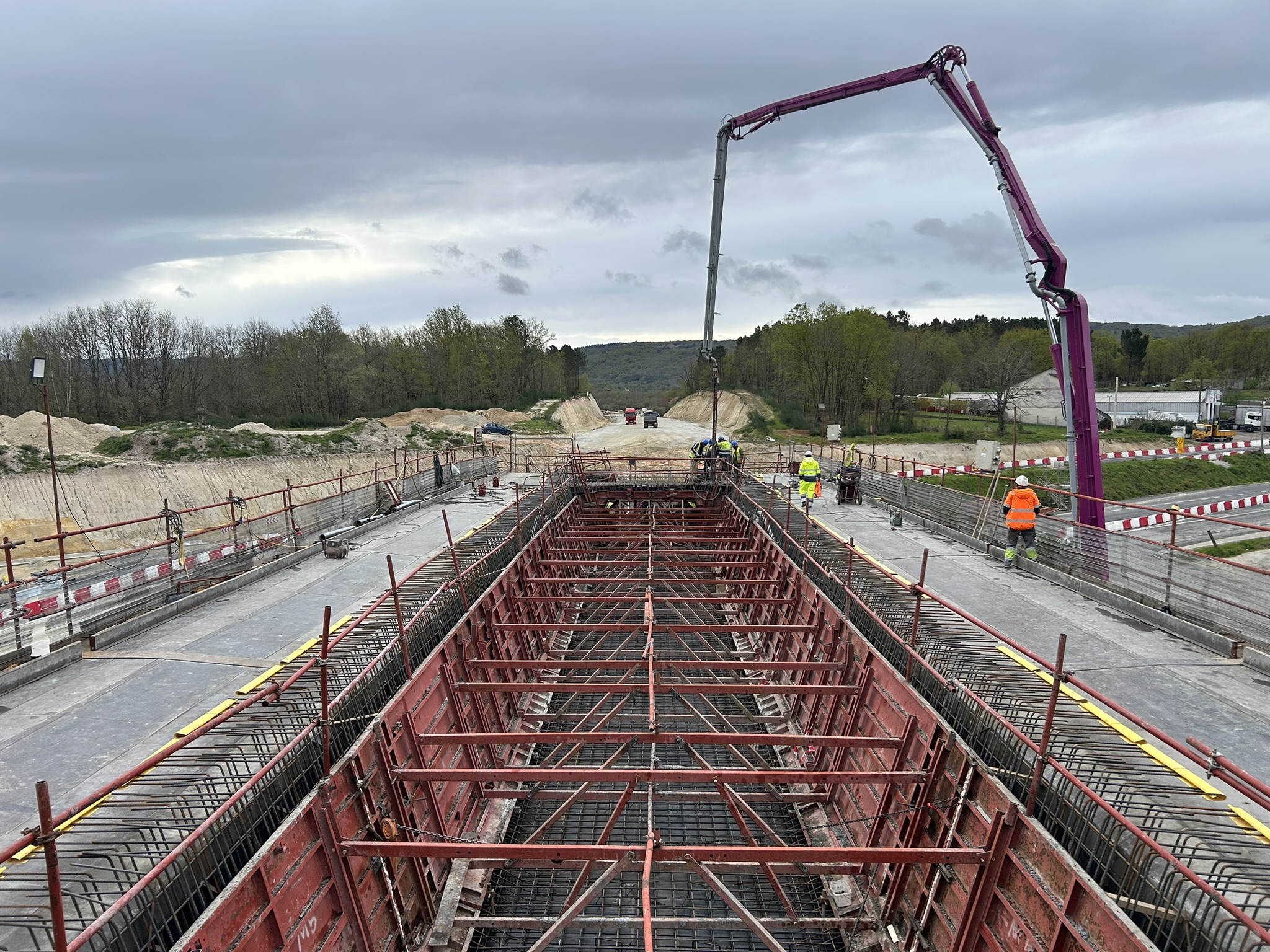
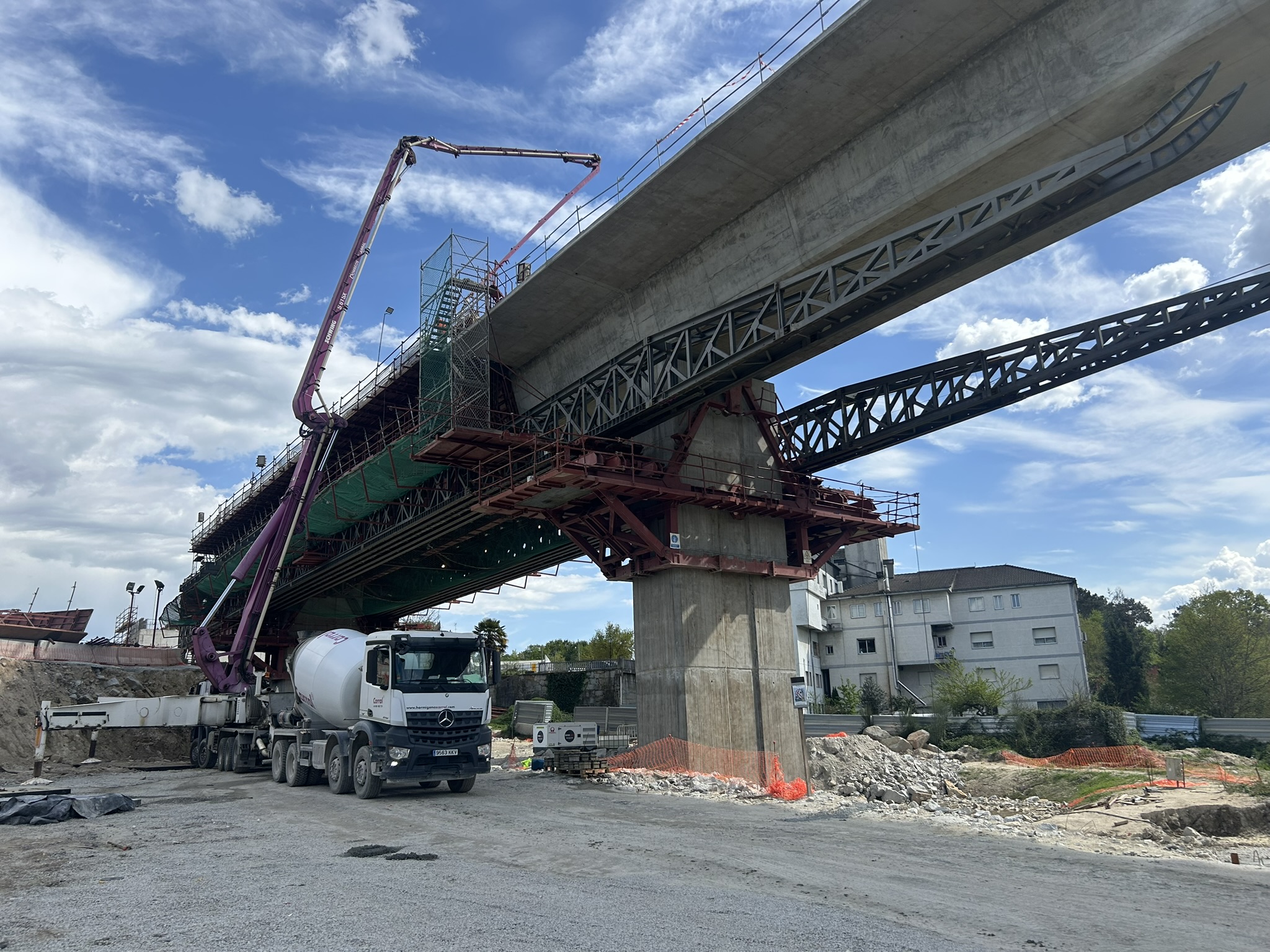
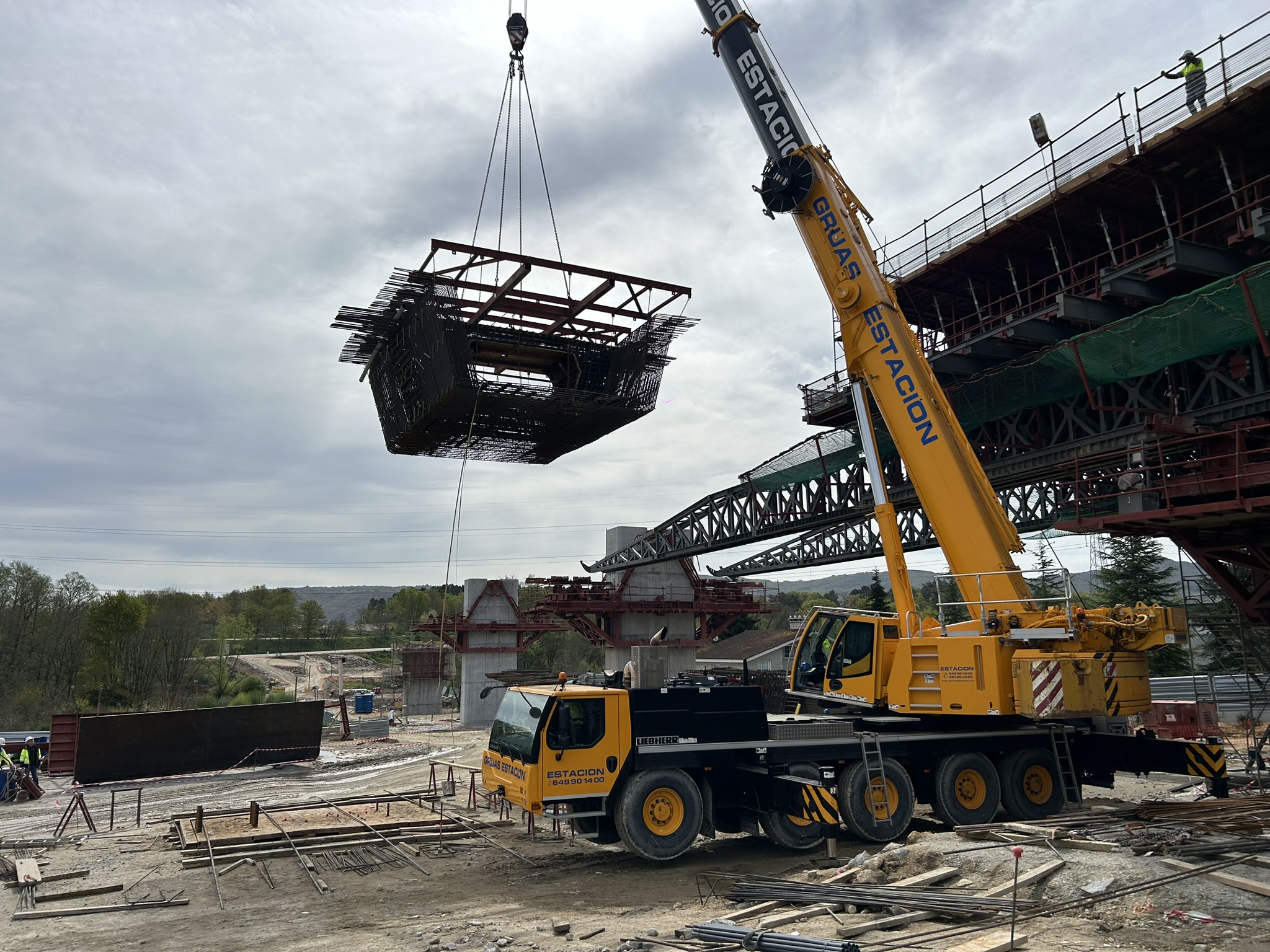
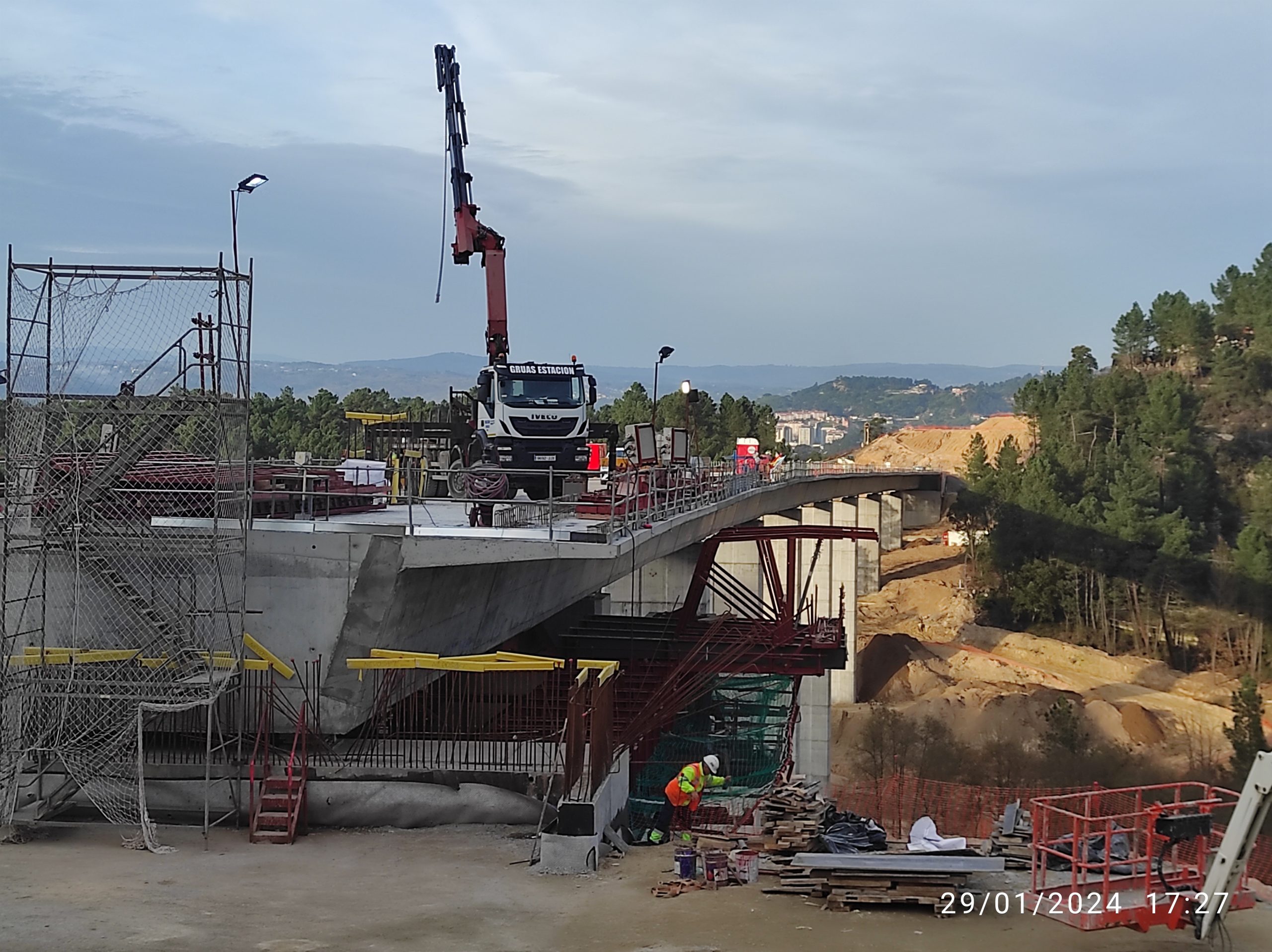
The Mesón de Calvos River viaduct is a continuous structure 387 meters long between abutment axes, located between chainages 1+510.750 and 1+897.750. It consists of a nine‑span continuous deck with spans arranged as 36 m + 7 × 45 m + 36 m. The cross‑section is a prestressed concrete box girder with constant depth of 3.05 meters and lateral cantilevers. The total deck width is 13.60 meters, with cantilevers of 3.36 meters on each side and a bottom slab width of 5.50 meters. The deck is constructed span by span using a self‑launching formwork system, starting from abutment 2 and progressing to abutment 1. The construction is divided into nine phases, each involving prestressing tendons (10 tendons per phase, with variations in strand numbers depending on the phase). The concrete used is HP‑45.
The San Benito stream viaduct is a continuous structure of 108 meters, distributed in four spans (24 + 30 + 30 + 24 m). The deck consists of a prestressed lightened slab with a constant depth of 2 meters and lateral cantilevers of 3.50 meters. The total deck width is 13.60 meters, and it is constructed using falsework or portal frame systems.
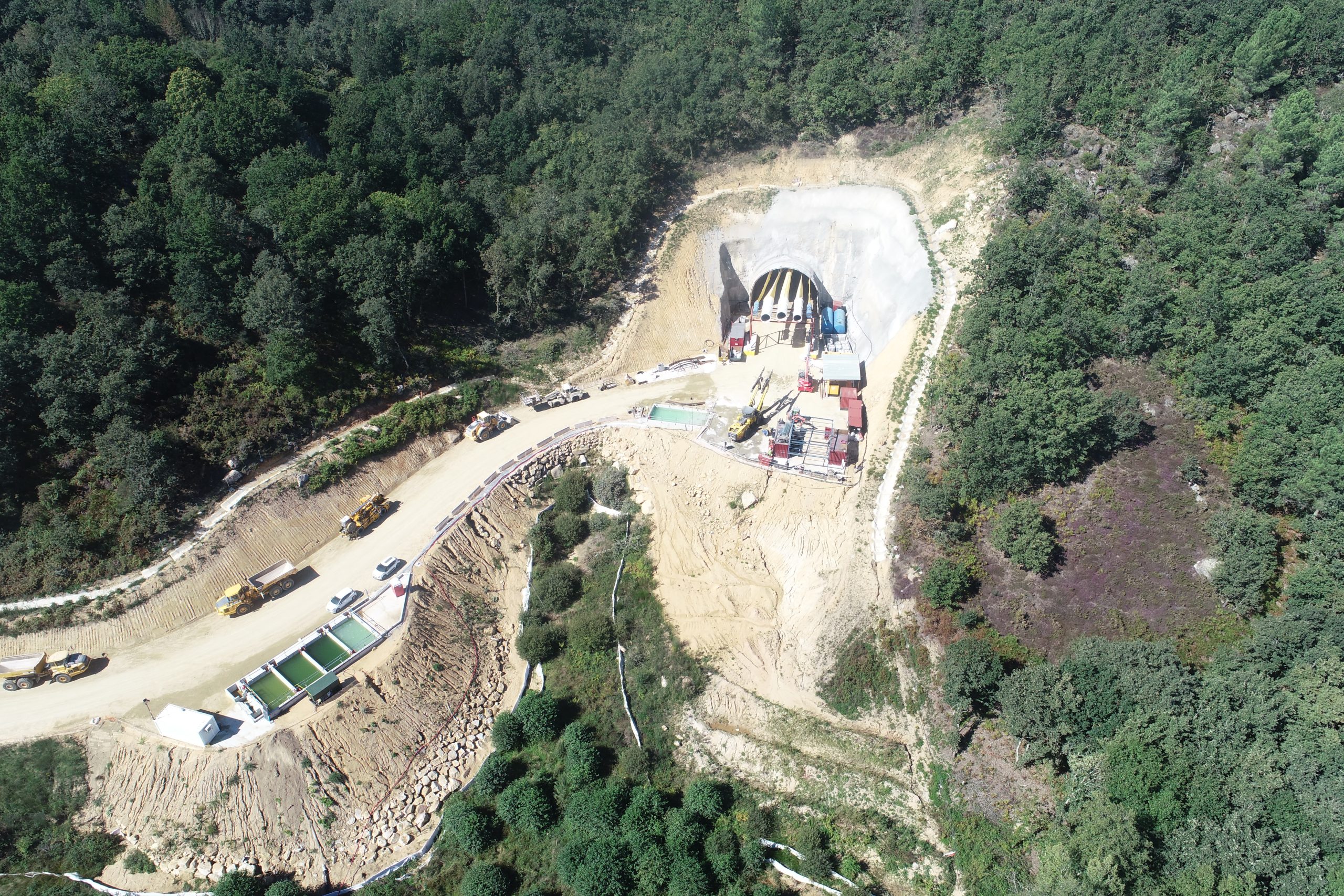
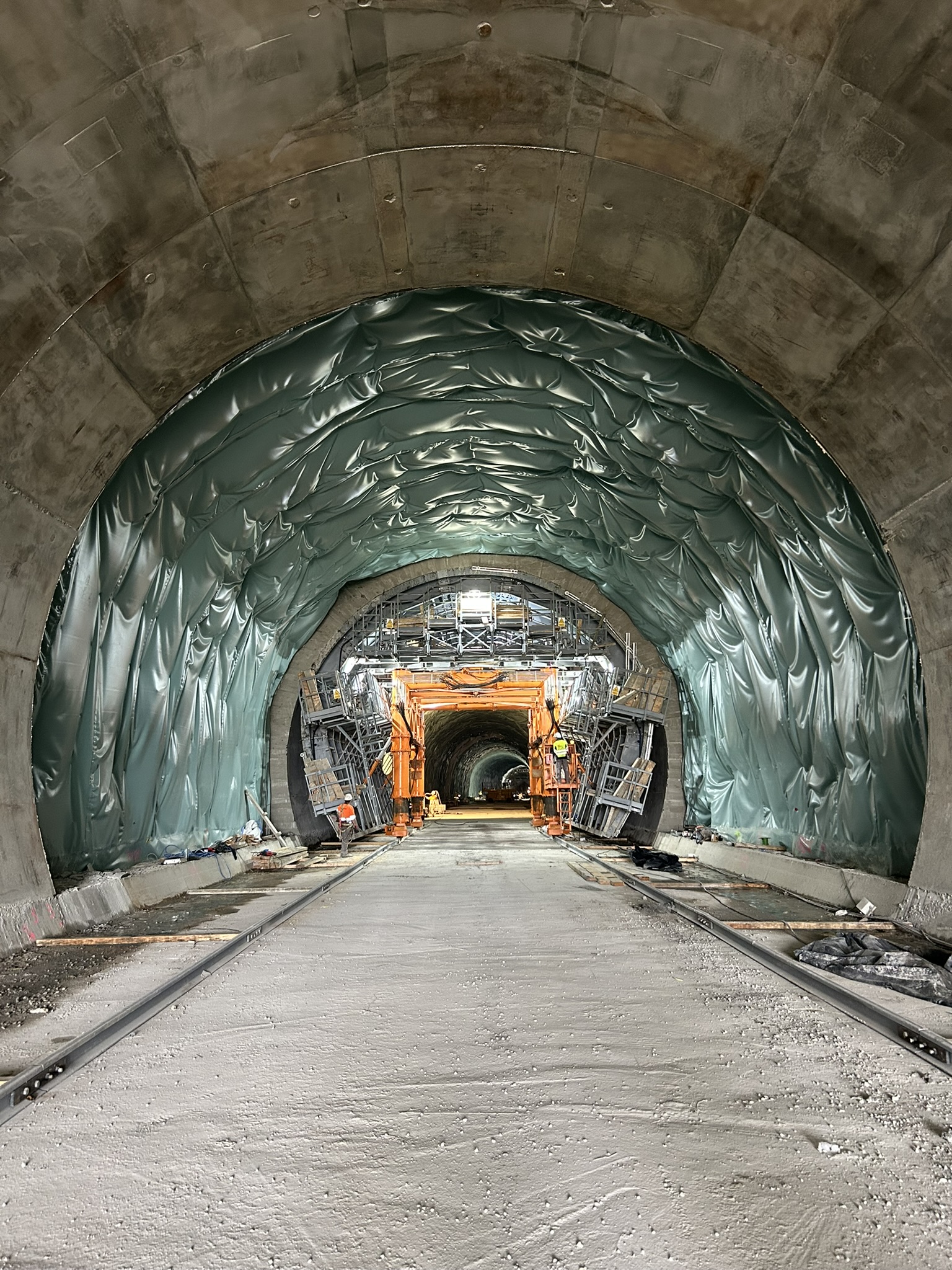
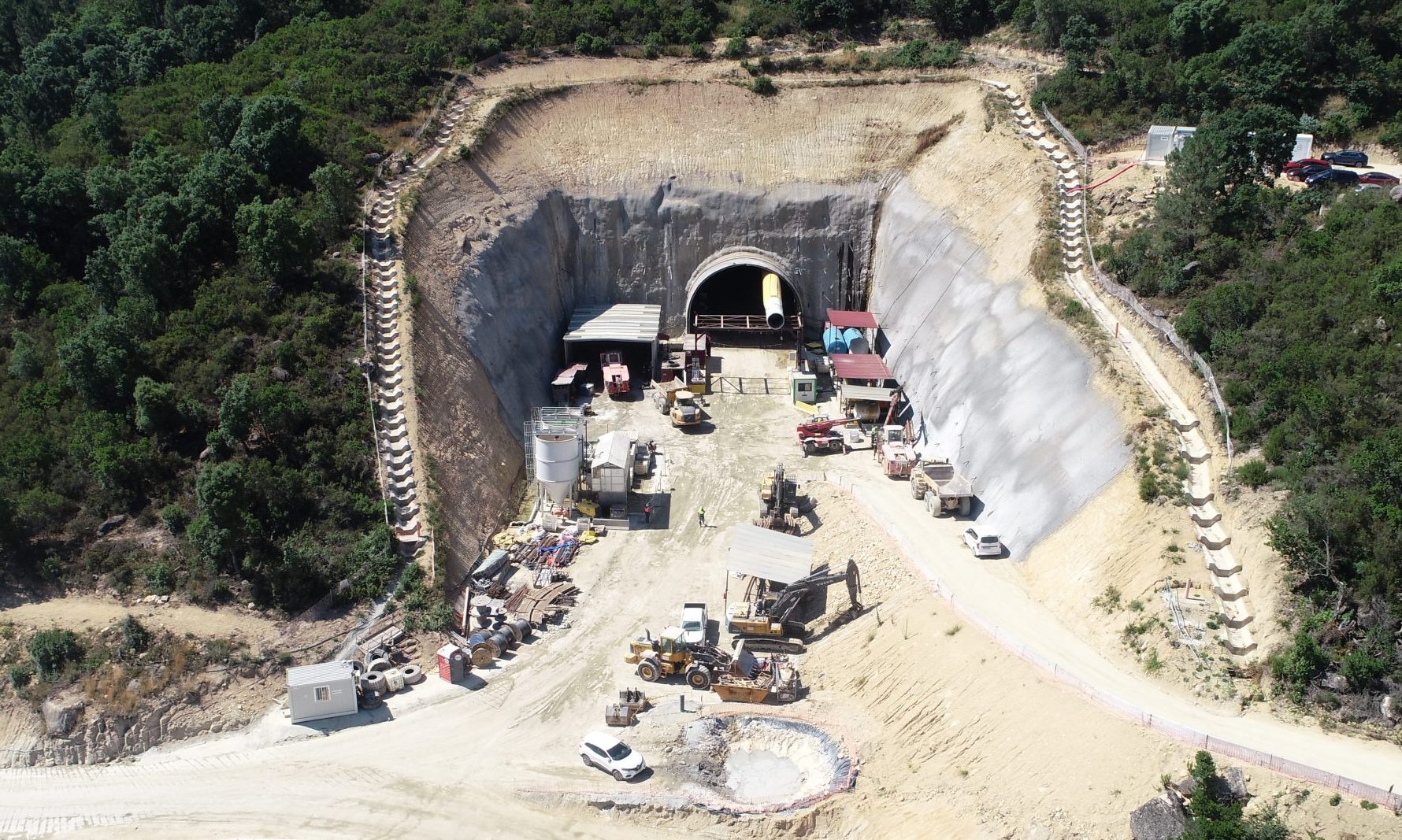
- The Rante Tunnel is a single‑tube, double‑track tunnel with a cross‑section of 85 m² and a total length of 3,410 meters, representing 60.88% of the section length. It includes three emergency exit galleries:
- Emergency gallery nº1: 185 m
- Emergency gallery nº2 (also an intermediate access gallery): 463 m
- Emergency gallery nº3: 322 m
The construction method is the New Austrian Tunnelling Method (NATM). Excavation is carried out using conventional drilling and blasting, in two phases: top heading (advance) and bench/invert (lower section). This method relies on the natural stress of the surrounding rock mass to stabilize the tunnel through the arch effect. Immediately after excavation, the tunnel is supported with shotcrete, rock bolts, and steel ribs (primary support). This creates a natural unloading ring that minimizes rock deformation. Finally, a cast‑in‑place fiber‑reinforced concrete lining is executed as the final finish.
In this project, excavation is performed simultaneously from the two main portals (entrance and exit) and from Gallery 2. Once this gallery reaches the main tunnel, excavation progresses from four active faces.
Social impact
The main social impact arises during tunnel construction due to noise and vibrations caused by blasting, particularly affecting the village of Rante, located above the tunnel alignment.
In compliance with the Environmental Impact Statement (EIS), blasting operations are restricted, with a ban between 22:00 and 08:00 in the section between chainages PK 3+900 and 4+400.
Additionally, to reduce disturbance to nearby residents, temporary acoustic barriers are planned during construction. These barriers will be installed around areas where noisy activities are expected, especially when using equipment such as breakers, grinders, or saws, with particular emphasis on sensitive zones like the Mesón de Calvos viaduct area.