Design and construction works of Lot 1 of the Madrid Justice City
The construction works of the Madrid Justice City Project are part of the initiative promoted by the Regional Ministry of Justice, Presidency and Local Administration of the Community of Madrid (CAM) to consolidate all judicial headquarters in Madrid into a single complex.
The selected site is the same plot where previous attempts were made, which proved unsuccessful for various reasons. This site is located in Valdebebas, northeast of the capital, near the Institute of Legal Medicine, the Isabel Zendal Hospital, and the Real Madrid Sports City. It is also adjacent to the new Valdebebas transport interchange, where Metro Line 11 is expected to arrive in 2029.
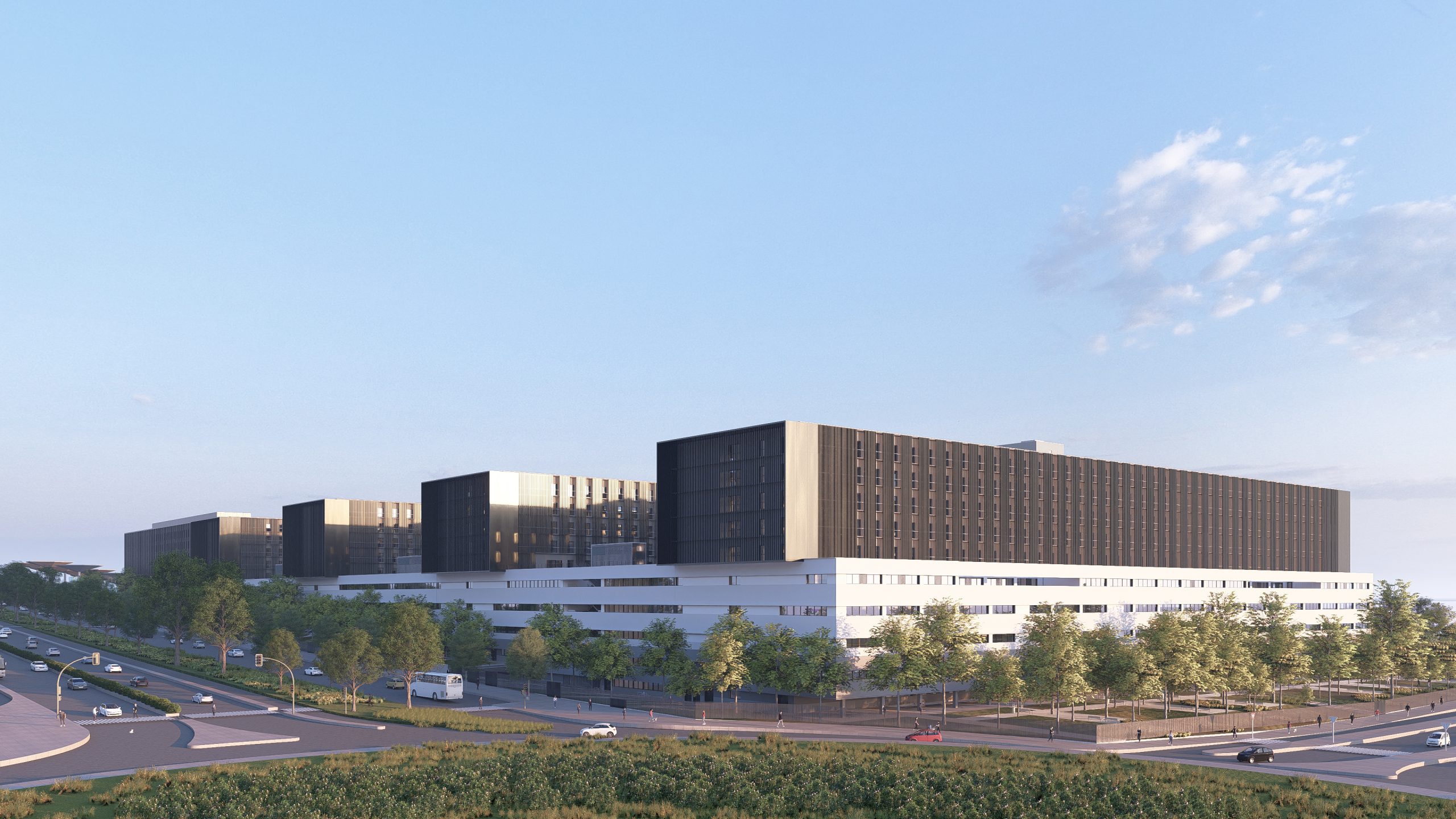
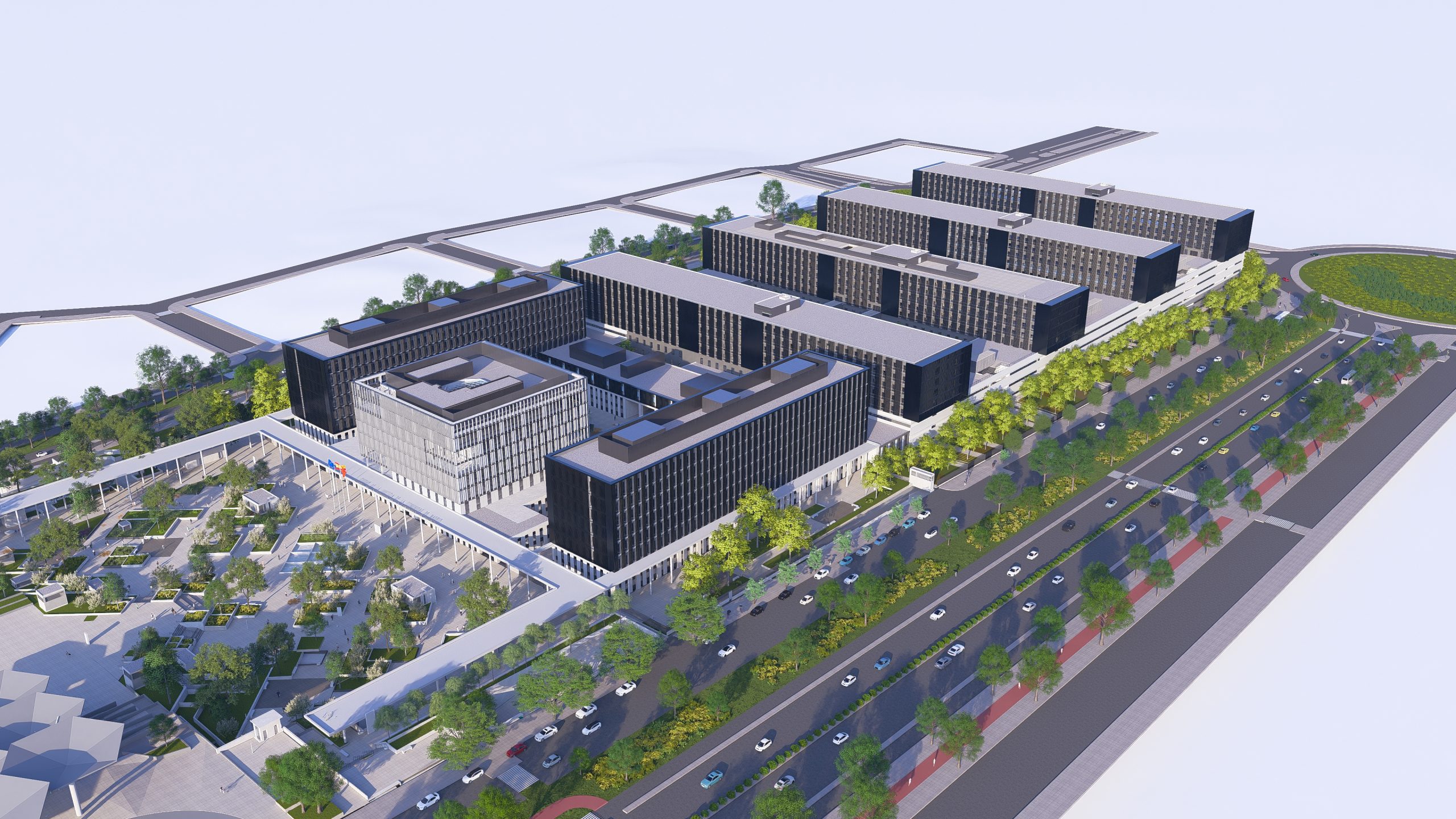
The works were divided into two design‑and‑build packages, with ROVER being awarded Lot 1 as part of a joint venture with OHLA and AZVI. This Lot 1 is the most institutionally significant, as it will house the future High Court of Justice of Madrid and the Provincial Civil and Criminal Courts, in addition to an underground public car park and the large access plaza connecting to the Valdebebas interchange.
From a technical standpoint, the first major challenge faced by the joint venture was to coordinate the drafting of the Basic Design and Detailed Design, together with Estudio Lamela, Ingeniería Torné, and Qube as designers, along with various specialist consultants, ensuring that the project complied both with the technical specifications and the economic constraints of the tender.
Once the Detailed Design was approved by the Community of Madrid, construction works began in October 2025, currently in the phase of earthworks, preliminary demolitions, and perimeter retaining structures.
The total construction budget (PEC) amounts to €161.4 million, making it one of the largest building projects currently underway in Spain, with significant logistical and scheduling challenges ahead. Key figures include approximately 500,000 m³ of excavation and earth movement, 12,000 linear meters of retaining piles, around 11,200 m³ of concrete in foundations, 139,000 m² of various types of floor slabs, 32,000 m² of roofing, 27,000 m² of façades, 1,300 m² of photovoltaic panels, 6 transformer stations, and 8 tower cranes in phased operation, among many other activities and auxiliary resources required to deliver the project.